
White Nights
White Nights is a short story (or novella) by Fyodor Dostoevsky, first published in December 1848 in the Russian literary journal Notes of the Fatherland. It is one of Dostoevsky's early works and stands out for its tender, lyrical tone—often described as the most optimistic and gentle piece in his entire oeuvre. The story is told from a first-person perspective by an unnamed narrator, a young man living in St. Petersburg who describes himself as a 'dreamer.' He is isolated, shy, and spends most of his time lost in elaborate fantasies, avoiding real human contact. The plot unfolds over four consecutive nights during the famous 'white nights' of St. Petersburg—a phenomenon in summer when the sky remains bright even at midnight. One evening, while wandering along a canal, the dreamer encounters a young woman weeping alone. When a drunken man harasses her, he intervenes, and they begin to talk. She introduces herself as Nastenka, a young orphan living with her blind grandmother. She shares her story: she fell in love with a young lodger who promised to return to her after a year, but the deadline has passed and he has not appeared. Over the next three nights, the dreamer listens to her, offers comfort, and gradually falls deeply in love with her. On the fourth night, when Nastenka finally believes she has been abandoned and begins to reciprocate the dreamer's feelings, her lover suddenly reappears. She immediately rushes to him, leaving the dreamer alone once more. The story ends with the dreamer writing Nastenka a letter, thanking her for the brief happiness she brought him and wishing her a joyful life, even as he returns to his solitary existence.
At its core, White Nights explores themes of loneliness, idealization, the conflict between fantasy and reality, and the nature of love. The dreamer represents a type of person who substitutes imagination for genuine experience, unable to bridge the gap between his inner world and the external one. Nastenka, in contrast, embodies a longing for real connection and tangible love. The story questions whether the dreamer's intense feelings are truly love or merely a projection of his own desires onto a convenient object. Dostoevsky masterfully uses the setting of St. Petersburg's white nights—a surreal, twilight atmosphere—to mirror the protagonist's psychological state: suspended between day and night, hope and despair. The novella's lyrical prose and emotional depth make it a quintessential example of early psychological realism.
Written when Dostoevsky was only 27, White Nights reflects his ongoing fascination with marginalized individuals and the complexities of the human psyche. It was published just before his arrest for involvement in the Petrashevsky Circle, which would lead to a mock execution and four years of hard labor in Siberia. Thus, the work captures a moment of relative innocence in his life, before the profound suffering that shaped his later masterpieces. The story's influence extends beyond literature: it has been adapted into films in Italy, the Soviet Union, France, Iran, India, and the United States, and has inspired songs and poems. In recent years, it experienced a remarkable resurgence in popularity on social media platforms like TikTok and Instagram, where readers praised its beautiful depiction of unrequited love. White Nights remains a beloved entry point to Dostoevsky's work, valued for its accessibility, emotional resonance, and timeless exploration of what it means to dream and to love.
The film adaptation directed by Leonid Kvinikhidze has received polarized critical reception. While Film.ru praises it as one of the finest showcases for actress Galina Polskikh's talent, Russian film critic Mikhail Trofimenkov deems the adaptation unsuccessful, arguing that it fails to capture the novel's introspective depth.
About the Author
Fyodor Mikhailovich Dostoevsky (11 November 1821 – 9 February 1881) was a Russian novelist, short story writer, essayist, and journalist, widely regarded as one of the greatest and most influential authors in world literature. He is often considered a founder of existentialism and a master of psychological fiction. Born in Moscow to a doctor father, Mikhail Dostoevsky, and a religious mother, Maria Nechayeva, he was the second of seven children. His early years were shaped by a love of literature, sparked by fairy tales, folktales, and the works of Pushkin, Gogol, and Schiller. In 1837, his mother died of tuberculosis, and the same year he was sent to the Nikolayev Military Engineering Institute in St. Petersburg, where he trained as a military engineer. He graduated in 1842 but left the profession shortly after to pursue a writing career. His first novel, Poor Folk (1846), earned him immediate acclaim from the influential critic Vissarion Belinsky, launching his literary career. However, his subsequent works, such as The Double (1846), received mixed reviews.
In 1847, Dostoevsky joined the Petrashevsky Circle, a group of intellectuals discussing utopian socialism and French socialist ideas. In April 1849, he was arrested along with other members for subversive activities. After being sentenced to death, he endured a mock execution on the Semyonovsky Square in December 1849—a traumatic event that profoundly changed his outlook. The sentence was commuted to four years of hard labor in a Siberian prison camp in Omsk, followed by exile as a soldier. During this period, he experienced extreme physical and mental suffering, but also underwent a spiritual transformation, moving away from Western-inspired socialism toward a deep commitment to Russian Orthodox Christianity and traditional values. After completing his hard labor in 1854, he served as a soldier in Semipalatinsk, was promoted to officer, and married his first wife, Maria Isayeva, in 1857. He was allowed to return to St. Petersburg in 1859, resuming his literary career.
The following two decades saw Dostoevsky's greatest creative achievements. He co-founded the journals Time and Epoch with his brother Mikhail, writing many works for them. In 1864, his wife and brother both died, leaving him burdened with debt and family responsibilities. In 1866, he published Crime and Punishment, a novel that cemented his international reputation. The same year, he hired a stenographer, Anna Snitkina, who later became his second wife in 1867. Anna proved to be a devoted partner, handling his finances and transcribing his works. Under her support, he produced The Idiot (1869), Demons (1872), The Adolescent (1875), and his magnum opus, The Brothers Karamazov (1880). He also wrote Notes from Underground (1864) and The Gambler (1867), among other significant works. His style combined psychological depth, philosophical inquiry, and a stark realism that exposed the struggles of marginalized individuals in Russian society.
Dostoevsky suffered from epilepsy throughout his life and faced constant financial difficulties, yet he remained prolific until his death. His works explore profound themes of free will, suffering, redemption, faith, and the nature of evil, influencing countless writers and thinkers, including Friedrich Nietzsche, Jean-Paul Sartre, Albert Camus, Franz Kafka, and Sigmund Freud. He died of a pulmonary hemorrhage on 9 February 1881 in St. Petersburg and was buried in the Tikhvin Cemetery at the Alexander Nevsky Monastery. His legacy endures: his novels are studied in universities worldwide, adapted into countless films and plays, and continue to resonate with readers seeking to understand the depths of the human soul.
StoryFlow
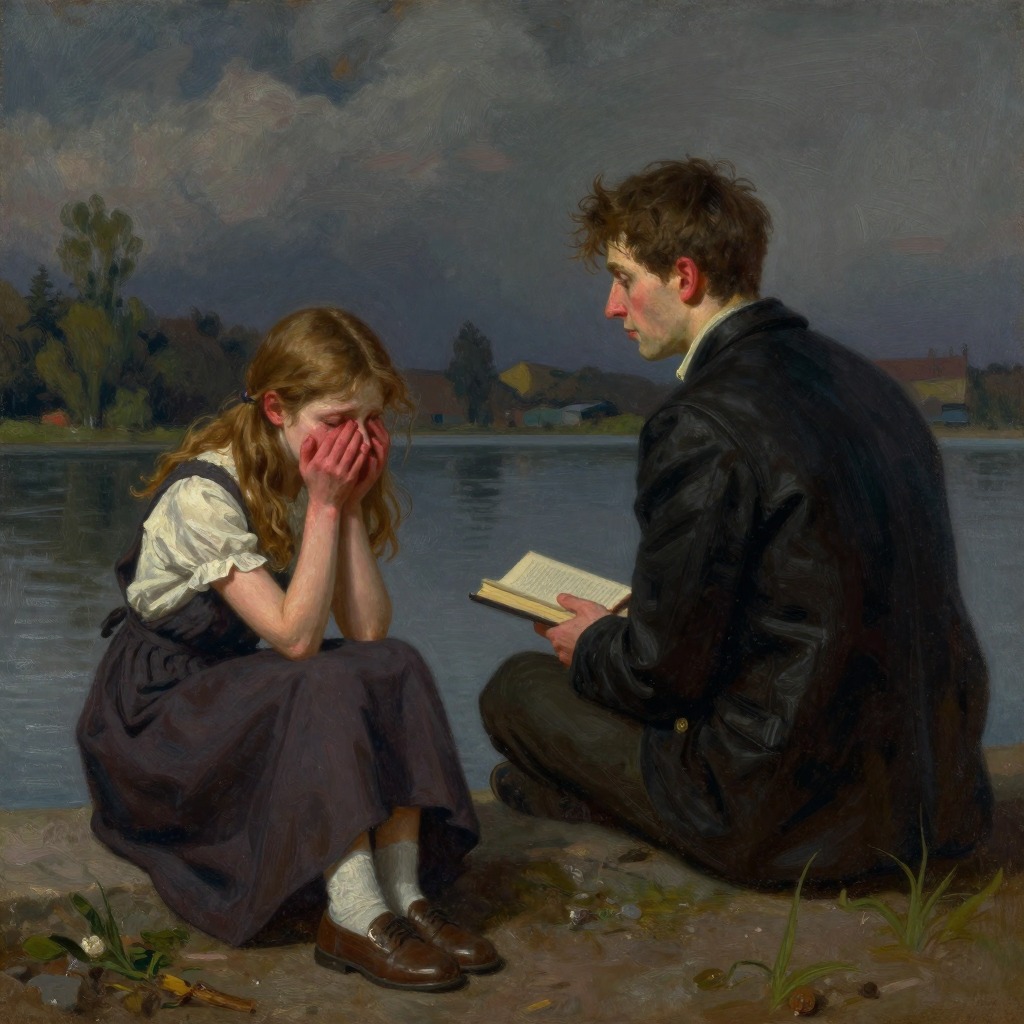
The Dreamer's First Encounter with Nastenka
Traces the initial meeting between the solitary Dreamer and the crying girl on the canal embankment, leading to their first conversation and agreement to meet again.
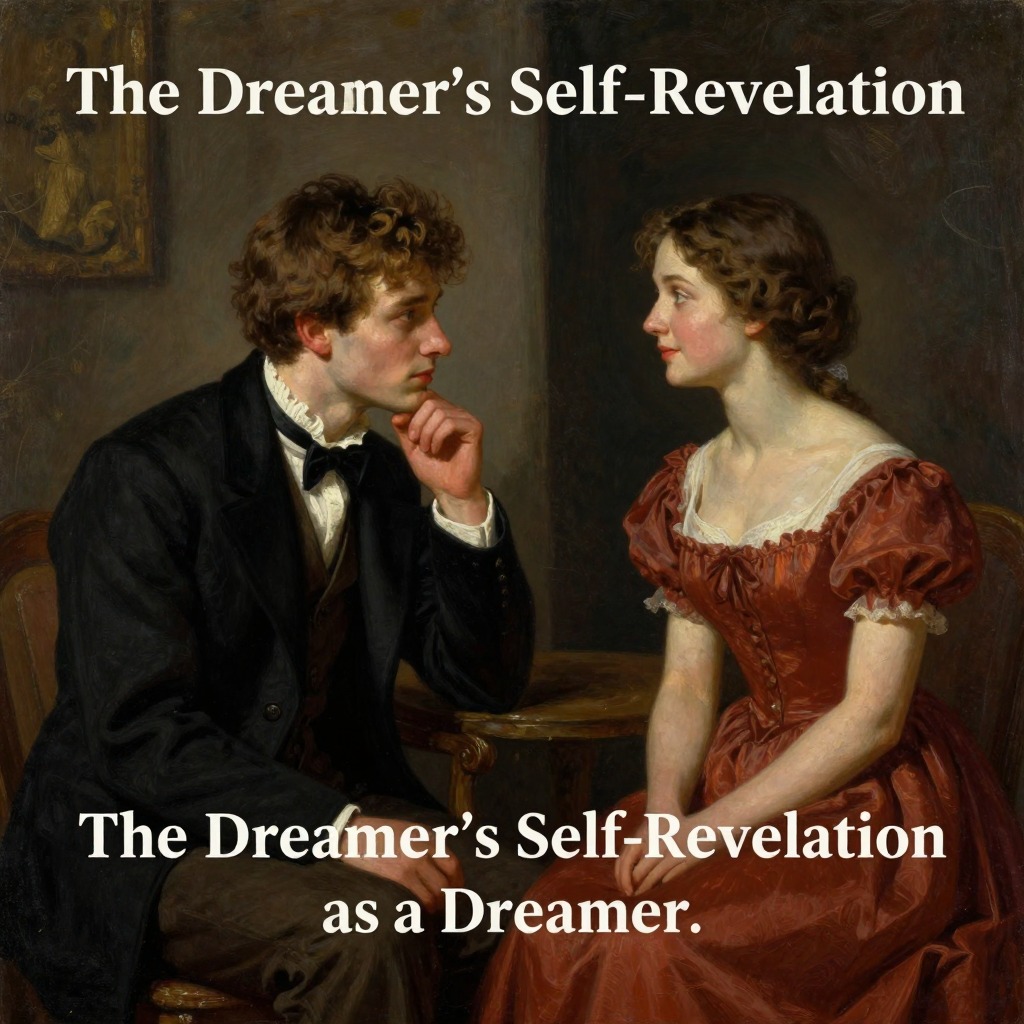
The Dreamer's Self-Revelation as a Dreamer
Follows the Dreamer's confession to Nastenka about his nature as a 'type'—a dreamer who lives in a fantasy world, and her sympathetic response.
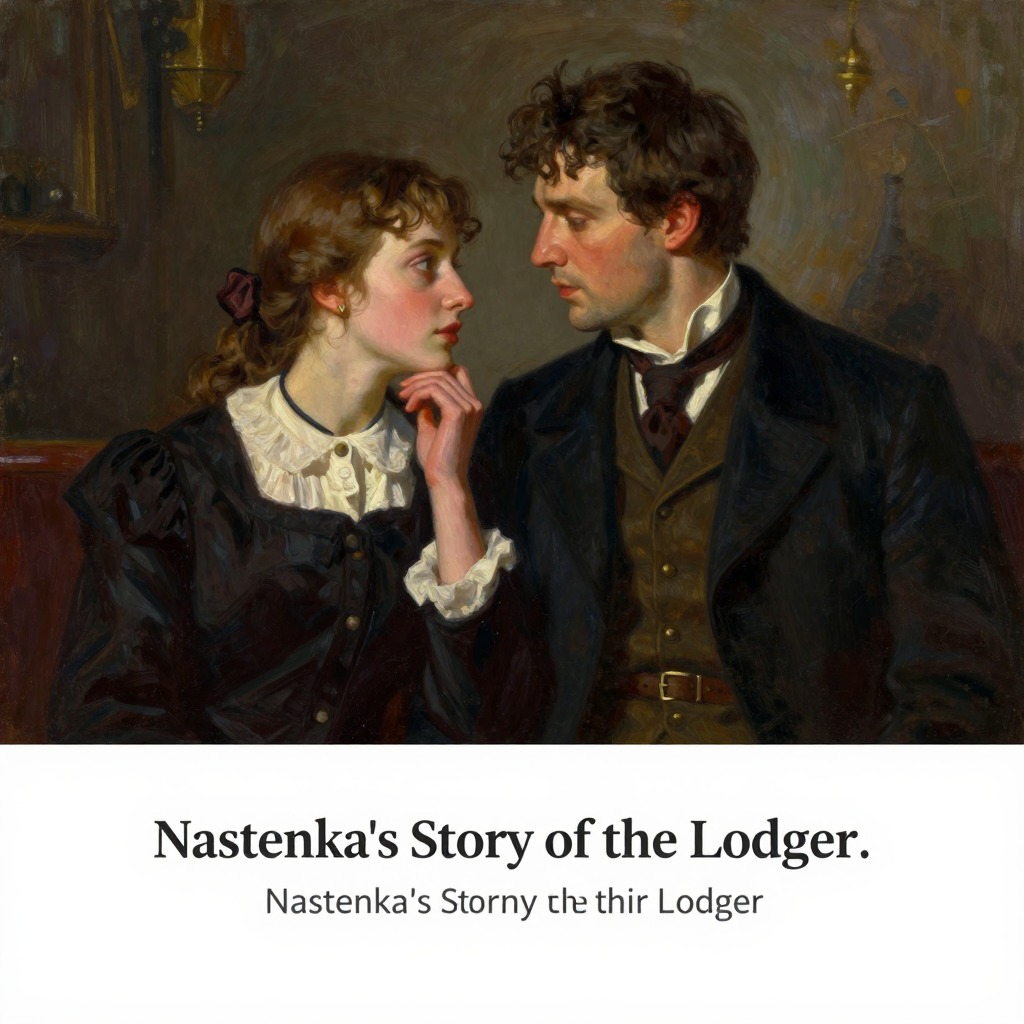
Nastenka's Story of the Lodger
Nastenka recounts her history with the lodger—how they met, her secret love, and his promise to return after a year.
